The live oaks over Monticello’s streets have outlasted the courthouse, and the reason they are still standing is that somebody pruned them well. Coste Tree Service prunes and trims trees across Monticello and Jefferson County with that same long view: dead wood out, structure corrected, canopy kept healthy and off the house, and not a single topped tree. Every job starts with a free on-site assessment and a written estimate.
A heritage oak is a hundred-year decision, and a pecan over the house is a safety decision every summer. We prune both like it.
Most people use the words interchangeably, and that is fine. The distinction still matters.
Pruning is the selective removal of specific branches for the health, structure, or safety of the tree. Each cut has a reason: a dead limb over the porch, a pecan scaffold reaching over the drive, a weak union.
Trimming is shaping and clearance, cutting growth back for appearance or to move it off a structure.
Around Monticello, good tree care is overwhelmingly pruning. A crew that only shapes the outside of an oak and never corrects its structure is selling a haircut.
After Idalia and Helene, homeowners across Jefferson County were approached by crews offering to top their oaks to make them safer. It does the reverse.
A topped oak responds to each stub with a flush of dense, fast, weakly attached shoots. Those shoots hang on the outer layer of the stub, not the tree’s structure. In a few years the canopy is heavier, the attachments are weaker, and every stub is decaying inward. The next storm finds that tree before it finds a properly pruned one.
Topping also:
When a tree has outgrown its spot, the correct tool is crown reduction, shortening a limb back to a lateral branch big enough to take over. No stubs, less sail, and it is the only version that leaves the tree safer.
Most jobs use one or more of these. We tell you which your tree needs.
Pruning type | What it does | When it is used |
|---|---|---|
Crown cleaning | Removes dead, dying, diseased, and broken branches | The standard job on mature oaks, safe any time |
Crown thinning | Selectively removes interior branches | Lets wind pass through a dense heritage oak |
Crown raising | Removes lower limbs for clearance | Over roofs, drives, barns, and for mowing pasture edges |
Crown reduction | Shortens limbs back to lateral branches | Oaks and pecans grown over a house, the correct alternative to topping |
Structural pruning | Corrects form on young trees | Builds a strong leader on new plantings and replacement trees |
Vista pruning | Opens a sightline through the canopy | Views across a field or a pond, without stripping the tree |
Deadwooding | Removes dead limbs only | Pecans and oaks over a drive or a roof before summer |
A caution on thinning. Taking too much from the interior and leaving foliage only at the tips is called lion’s tailing. It loads the ends of long bare limbs and makes them more likely to break. If a tree looks dramatically different afterward, too much came off.
On site assessment, written price, no obligation. We will tell you exactly what your tree needs, and what it does not.
Timing on this side of the Big Bend follows North Florida’s logic, with cold as the local wrinkle.
Dead, damaged, and hazardous limbs come off whenever you find them.
Structural pruning on large trees should be finished well before June 1, so cuts seal before the first tropical system. The National Weather Service in Tallahassee covers Jefferson County.
Live oaks and other hardwoods are best pruned in the dormant season, late winter into early spring, before the flush.
Pecans get their window in late winter, after hard-freeze risk eases and before bud break. Monticello sits far enough inland for real freezes, so we do not prune cold-sensitive trees heading into winter.
Spring-flowering trees are pruned after bloom.
If a storm is already in the forecast, it is too late to prune safely. For a tree already failing, see Emergency Tree Service in Monticello.
Palms are fewer in Jefferson County than on the coast, but the ones in town, mostly cabbage palms and a few ornamentals, get the same mistake: the hurricane cut, stripping a palm to a tuft and calling it storm safety. UF/IFAS observed after the 2004 and 2005 seasons that hurricane-cut palms were more likely to lose their crowns than palms left full. The guidance is in UF/IFAS Pruning Palms.
Proper palm pruning:
Over-pruned palms draw weevils and disease, and fusarium wilt spreads on dirty tools, so tools are sterilized between palms. Cabbage palms shed their own fronds and often need nothing at all.
Monticello’s older streets are lined with crape myrtles, and too many get cut back to knuckles every winter. The practice has a name, crape murder, and it is topping on a smaller tree.
The stubs push whippy shoots that flop under the blooms, the knuckles swell and decay, and the natural vase shape and peeling bark are lost for good.
Crape myrtles bloom on new growth, so yearly pruning helps when done right: suckers at the base, crossing branches, spindly interior twigs, and old seed heads removed, with the trunk structure thinned to show. Cuts stay small. A knuckled tree can be restored over a few seasons, and we can set out the plan.
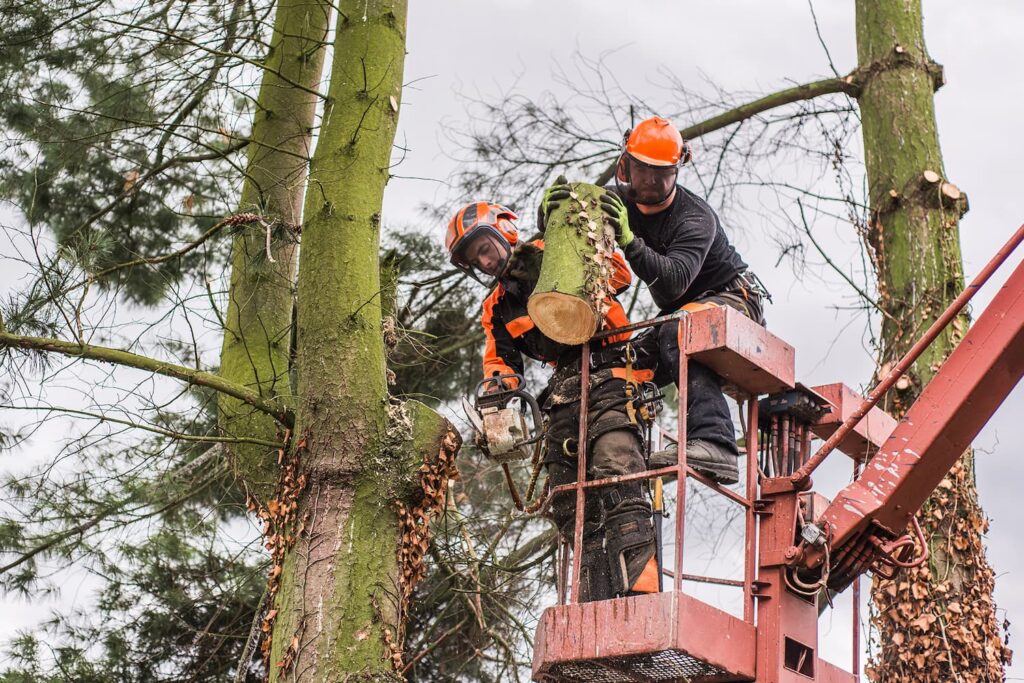
Light, regular care on a heritage oak costs far less over its life than fixing fifteen years of neglect at once.
Every Coste pruning quote covers:
Not included: stump grinding, removal, fertilization, disease treatment, and roof or gutter work. Each is quoted separately.
Job type | Typical range |
|---|---|
Small ornamental or crape myrtle | [$X to $X] |
Pecan, crown cleaning and reduction | [$X to $X] |
Mature live oak, crown cleaning and deadwood | [$X to $X] |
Large oak, crown reduction over a historic home | [$X to $X] |
Palm, per palm | [$X to $X] |
Five factors set the price:
Be wary of a quote well below the others. In this trade the cheapest bid is very often a topping job.
Coste Tree Service prunes trees across Monticello and Jefferson County, including the Monticello Historic District, Lloyd, Lamont, Wacissa, Waukeenah, and Aucilla. For scheduled removals, see Tree Removal in Monticello.
In common use they mean the same thing. Technically, pruning is removing specific branches for the tree's health, structure, or safety, while trimming is shaping and clearance. Good tree care is mostly pruning.
Yes. Topping triggers weak regrowth, opens wounds the tree cannot seal, and leaves it more likely to fail in a storm. Crown reduction is the correct way to reduce a tree that has outgrown its spot.
Oaks in the dormant season, late winter into early spring. Pecans in late winter once hard-freeze risk eases and before bud break. Finish major structural work before June 1.
Pecans are prone to summer limb drop, shedding large, healthy-looking limbs in the heat. Crown cleaning and reducing overextended limbs over a house or drive lowers the risk.
Crown cleaning every 3 to 5 years, sooner if limbs reach over a roof or a street. Conservative, regular care is how an oak lasts centuries.
Routine pruning generally does not require one. Heavy reduction on a protected tree, or work in the historic district, can. We check before we cut, and you can confirm with the City of Monticello.
We tell you whether it needs to come down, and what it costs, in writing.
Coste Tree Service prunes and trims trees across Crawfordville and Wakulla County to the industry standard: take off what makes a tree unsafe or unhealthy, leave the rest, and never top it. On a Wakulla County lot that mostly means getting dead wood out of the pines before a Gulf storm does, lifting live oak canopies off roofs, and keeping the water oaks honest. Every job starts with a free on-site assessment and a written estimate.
Pruning is what keeps a tree off our removal list. A pine deadwooded on schedule is far less likely to put a limb through a roof, and far less likely to end up as a removal after the next storm.
Most homeowners use the two words interchangeably, and that is fine. There is a difference worth knowing.
Pruning removes specific branches for the health, structure, or safety of the tree. Every cut has a reason: a dead pine limb over the drive, a crossing oak branch, a weak union.
Trimming is shaping and clearance work, cutting growth back for sightlines, appearance, or to move it off a structure.
On the flatwoods lots around Crawfordville, good tree care is mostly pruning. If a crew is only shaping the outside of your canopy and never touching the dead wood inside a pine, you are paying for a haircut.
After every Big Bend storm, crews roll through Wakulla County offering to cut trees back hard so they will not blow over. Topping, cutting limbs to stubs with no regard for structure, is the most damaging thing routinely done to trees in this county.
A topped tree answers each stub with a burst of dense, fast, weakly attached shoots. Those shoots hang on the outer layer of the stub, not the tree’s structure. Within a few years you have a heavier canopy on weaker attachments, sitting on wounds that are rotting inward. That tree is more likely to fail in a hurricane than it was before anyone cut it.
Topping also:
If a company recommends topping or offers to “cut it back hard,” send them on. When a tree is genuinely too big for its spot, the correct tool is crown reduction, shortening limbs back to a lateral branch large enough to take over. No stubs, lower sail, and it actually works.
Crown Cleaning
Removes dead, dying, diseased, and broken branches.
Used for: The most common service. Safe on nearly any tree, any time.
Crown Thinning
Selectively removes interior branches to reduce density.
Used for: Improving air movement through the canopy and reducing wind load.
Crown Raising
Removes lower limbs to create clearance underneath.
Used for: Clearance over a roof, driveway, sidewalk, or for mowing.
Crown Reduction
Shortens limbs back to suitable lateral branches.
Used for: Reducing height or spread near structures and lines. The correct alternative to topping.
Structural Pruning
Corrects form on young and medium trees.
Used for: Building a strong single leader early, preventing expensive problems later.
Vista Pruning
Selectively opens a sightline through the canopy.
Used for: Views and light, without stripping the tree.
Deadwooding
Removes dead limbs only.
Used for: Hazard reduction on mature trees, especially over targets.
One caution on crown thinning. Removing too much interior growth and leaving foliage only at the branch tips is called lion’s tailing. It looks tidy and it is harmful, because it moves all the weight to the ends of long bare limbs and makes them more likely to break. Proper thinning is subtle. If your tree looks dramatically different, too much came off.
On site assessment, written price, no obligation. We will tell you exactly what your tree needs, and what it does not.
Wakulla County takes storms on the nose, so timing matters more here than inland.
Dead, broken, and hazardous limbs come off whenever you find them. There is no wrong season for removing a limb that is already a risk.
Structural pruning on large trees should be done well before June 1. Cuts need time to seal before a tropical system, and heavy pruning in late summer leaves open wounds at exactly the wrong moment. The National Weather Service in Tallahassee covers the Big Bend coast, and hurricane season runs June 1 through November 30.
Hardwoods, including the live oaks and water oaks, are best pruned in the dormant season, late winter into very early spring, before the flush.
Spring-flowering trees are pruned after they bloom.
Pines are pruned lightly and only for dead wood and clearance. Heavy pruning stresses them.
Palms, mostly cabbage palms out here, follow their own rules in the next section.
If a storm is already in the forecast, it is too late to prune safely. For a tree already failing, see our Emergency Tree Service in Crawfordville page.
Lightly, and far less often than most people think.
The most common palm mistake on the Gulf coast is the hurricane cut, stripping a palm to a tuft of upright fronds and calling it storm protection. According to UF/IFAS, palms given that cut were more likely to lose their crowns in the 2004 and 2005 hurricane seasons than palms left full, because stripping fronds exposes the growing bud to wind a full canopy would buffer. The guidance is in UF/IFAS Pruning Palms.
What proper palm pruning looks like:
Two more things. Over-pruned palms draw palm weevils and are more vulnerable to lethal palm diseases. And fusarium wilt spreads on contaminated pruning tools, so tools must be sterilized between palms. Ask any company whether they do this.
Cabbage palms, the native sabal palms on nearly every Wakulla lot, shed their own fronds and often need no pruning at all.
Cutting crape myrtles back to thick knuckles every winter is so common across the South it has a nickname: crape murder.
It is topping on a smaller tree, with the same results. Whippy shoots flop under the weight of the blooms, the knuckles swell and decay, and the natural vase shape and peeling bark are gone for good.
Crape myrtles bloom on new growth, so they do benefit from yearly pruning. Done right, that means removing suckers at the base, crossing branches, spindly interior twigs, and old seed heads, while thinning to show the trunk structure. Cuts stay small. The tree keeps its shape and blooms just as well. If yours has been knuckled for years, it can be restored over a few seasons, and we can lay out the plan.
It depends on species, age, and what the tree hangs over.
A pine that gets a light touch every few years costs far less over its life than one left alone until a storm takes it.
Every Coste pruning quote covers:
Not included: stump grinding, removal, fertilization, disease treatment, and roof or gutter work. Each is quoted separately.
Job type | Typical range |
|---|---|
Small ornamental or crape myrtle | [$X to $X] |
Pine deadwooding, one tree | [$X to $X] |
Mature oak, crown cleaning and deadwood | [$X to $X] |
Large tree, crown reduction near structure | [$X to $X] |
Cabbage palm, per palm | [$X to $X] |
Five factors set the price
Be wary of a quote well below the others. In this trade the cheapest bid is very often a topping job, and it costs you far more over the life of the tree.
Coste Tree Service prunes trees across Crawfordville and Wakulla County, including Medart, Wakulla Gardens, Magnolia Gardens, Wakulla Station, Sopchoppy, Panacea, Shell Point, St. Marks, and Ochlockonee Bay. For scheduled removals, see Tree Removal in Crawfordville.
In everyday use they mean the same thing. Technically, pruning is removing specific branches for the tree's health, structure, or safety, while trimming is shaping and clearance cutting. Good tree care is mostly pruning.
Yes. Topping triggers weak regrowth, opens wounds the tree cannot seal, and leaves it more likely to fail in a storm than before. Crown reduction is the correct way to bring a tree down in size.
Late winter into very early spring, before new growth. Dead limbs can come off any time. Finish major structural work before June 1 so the tree recovers before storm season.
No. UF/IFAS found that hurricane-cut palms were more likely to lose their crowns in the 2004 and 2005 seasons than palms left full. Remove only completely brown fronds and keep the canopy rounded.
Deadwooding every 2 to 3 years for most pines, and any dead limb over a roof, drive, or walkway as soon as you notice it. Pines do not take heavy pruning well, so we remove what is dead or dangerous and leave the rest.
Routine pruning generally does not require one. Heavy reduction on a county-protected tree in a development context can. We check before we cut, and you can confirm current rules with Wakulla County Planning.
We tell you whether it needs to come down, and what it costs, in writing.
Tell us what you need and we’ll call you back within one business day.
I couldn’t recommend Coste Tree Service more highly! Jason Coste and his team are professional, reliable, and incredibly knowledgeable. From the first call to the final cleanup, the entire process was seamless. They showed up on time, took great care in their work, and left the property looking better than ever.