How to Trim a Palm Tree in Florida: When and How Much
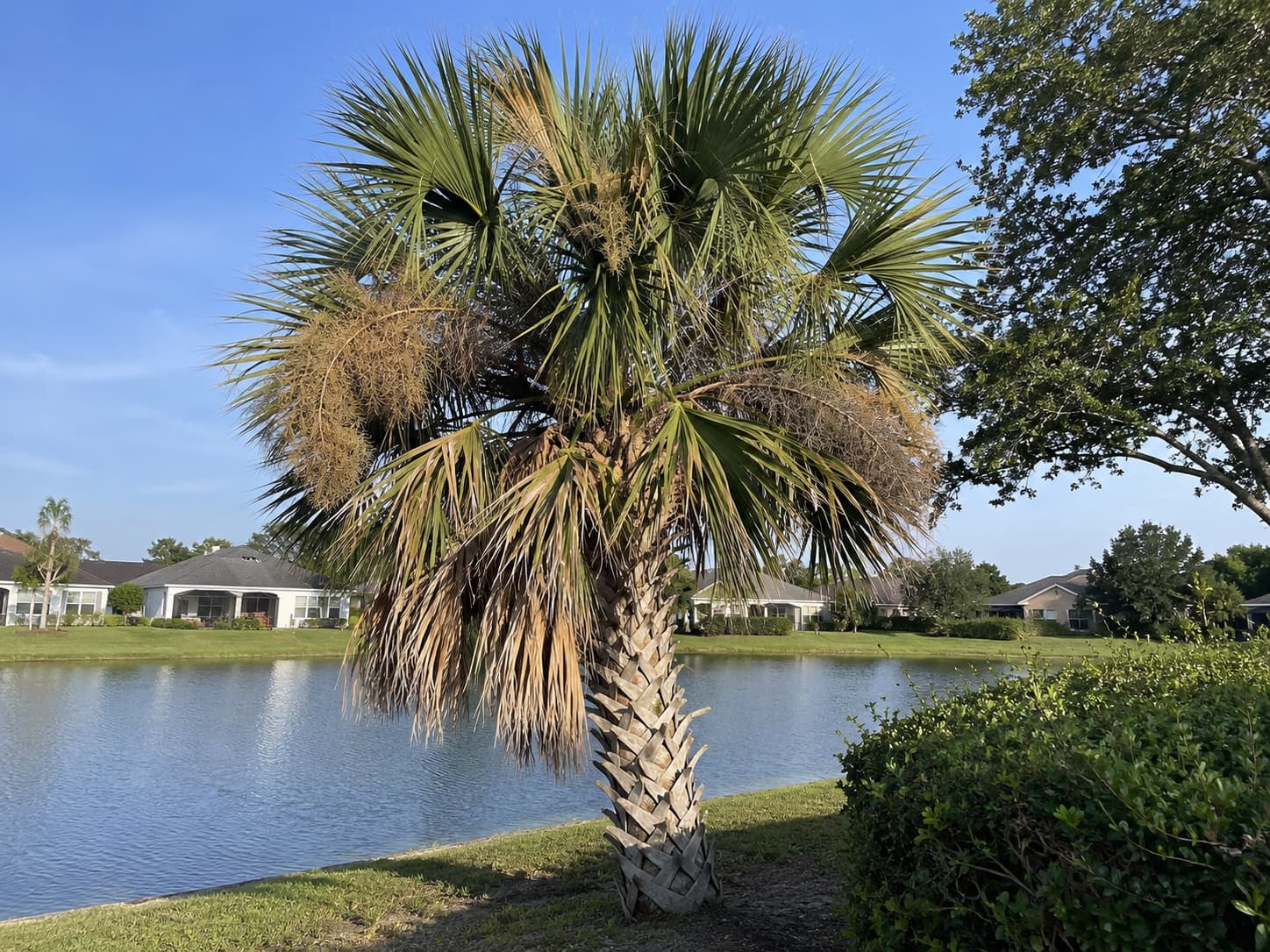
Palm trees are iconic in Florida, but they are also one of the most commonly mistreated plants in the state. The single biggest reason is a well-intentioned but harmful practice called the hurricane cut, which removes far too many fronds and actually leaves palms more vulnerable to storms, not less.
This guide explains how to trim a palm tree correctly, when to do it in Florida, exactly how much you should remove, and why over-pruning does real damage. Whether you are caring for a sabal palm, queen palm, or any other variety, the principles are the same.
To trim a palm tree correctly, remove only fully brown, dead fronds and leave all green fronds in place. Never cut fronds above a 9-and-3 o’clock horizontal line. In Florida, trim once a year in late spring or early summer. Over-pruning, including the hurricane cut, weakens palms and makes them more storm-vulnerable.
Key Takeaways
- Only remove fully brown, dead fronds. Green fronds are the palm’s food supply, so cutting them starves the tree.
- Never prune above the 9-and-3 line. Imagine a clock face; healthy fronds at or above horizontal should stay.
- Trim once a year in late spring or early summer in Florida, before hurricane season.
- Avoid the hurricane cut. UF/IFAS research shows over-pruned palms are more likely to snap in storms, not less.
- Some palms are self-cleaning and need no trimming at all, since their old fronds drop on their own.
Why Do Palm Trees Need Trimming?
Palm trees need only minimal trimming, mainly to remove dead or dying fronds, seed pods, and flower stalks for tidiness and safety. Unlike many trees, palms do not benefit from heavy pruning. In the wild, palms thrive with no trimming at all, dropping old fronds naturally, so the goal is light maintenance, not shaping.
It helps to start by correcting a common misconception: palms are not like oaks or maples. They do not need to be pruned to stay healthy.
As UF/IFAS Gardening Solutions explains, palms have a single growing point and a limited number of fronds, and every green frond is actively feeding the tree, so removing green fronds directly reduces the palm’s energy supply. This is fundamentally different from hardwood trees that can be shaped and thinned.
The legitimate reasons to trim a palm are limited:
- Removing dead or fully brown fronds that no longer feed the tree.
- Removing seed pods and flower stalks to reduce fruit drop and litter.
- Removing hazards, like a dead frond hanging over a walkway.
- Removing diseased fronds, which should be bagged and disposed of.
That is essentially the entire list. If a frond still has significant green, the palm still needs it.
When Should You Trim Palm Trees in Florida?
The best time to trim palm trees in Florida is late spring or early summer, before hurricane season and while the palm is actively growing so it recovers quickly. Avoid trimming in fall and winter, when cooler temperatures slow recovery and leave cuts vulnerable to cold damage. Dead fronds can be removed any time.
Timing matters because a palm handles the minor stress of trimming best when it is growing vigorously.
Florida pruning guidance and UF/IFAS extension sources point to the same window: late spring into early summer is ideal, since the palm is in active growth and can recover fast. This also lets you remove any loose or dead material before the peak of hurricane season.
A few timing principles:
- Late spring to early summer is best for any real trimming.
- Avoid fall and winter, when palms are less active and cuts can expose the tree to cold damage.
- Dead, brown fronds and seed pods can be removed anytime, since taking them off does not cost the palm any energy.
- Trim before a storm, not during a warning, and never leave debris piles out when a storm is approaching, since they can block drains.
Most palms need this attention only once a year. Trimming more often than that usually means green fronds are being removed unnecessarily.
How Much of a Palm Can You Safely Remove?
You can safely remove only fully brown, dead fronds. The absolute limit is to never cut any frond above a 9-and-3 o’clock horizontal line, imagining the canopy as a clock face. Even that is a maximum, not a goal. The healthiest approach is to leave a full, round canopy and remove only dead material.
This is the single most important rule in palm care, and it is where most trimming goes wrong.
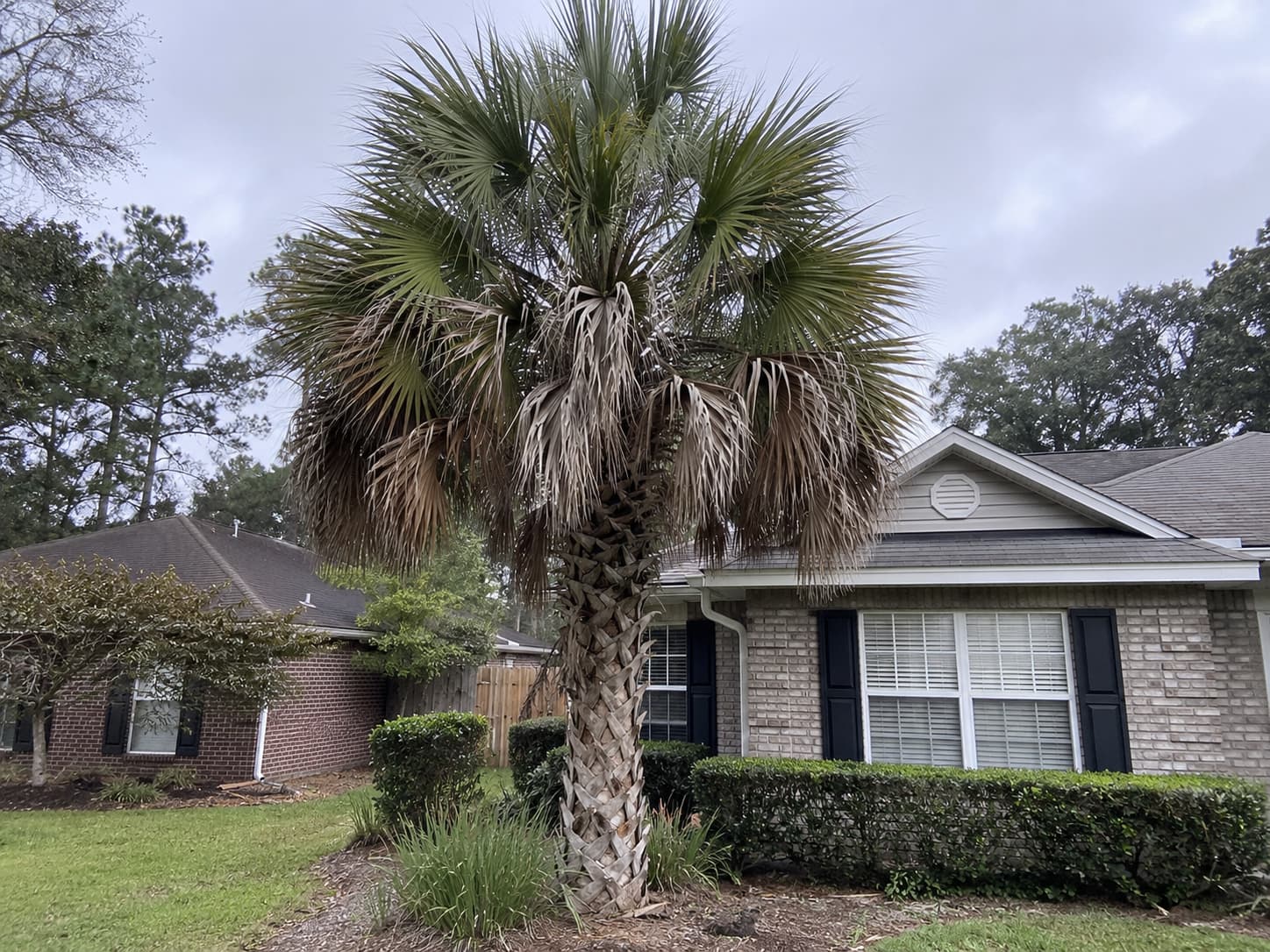
UF/IFAS Gardening Solutions uses the clock-face guideline: picture the palm canopy as a clock, and never prune past 9 o’clock and 3 o’clock. But they are clear that this is the absolute limit, not the recommendation. The ideal is a round, full canopy with green fronds extending down to the bottom, removing only fully brown fronds.
What this means in practice:
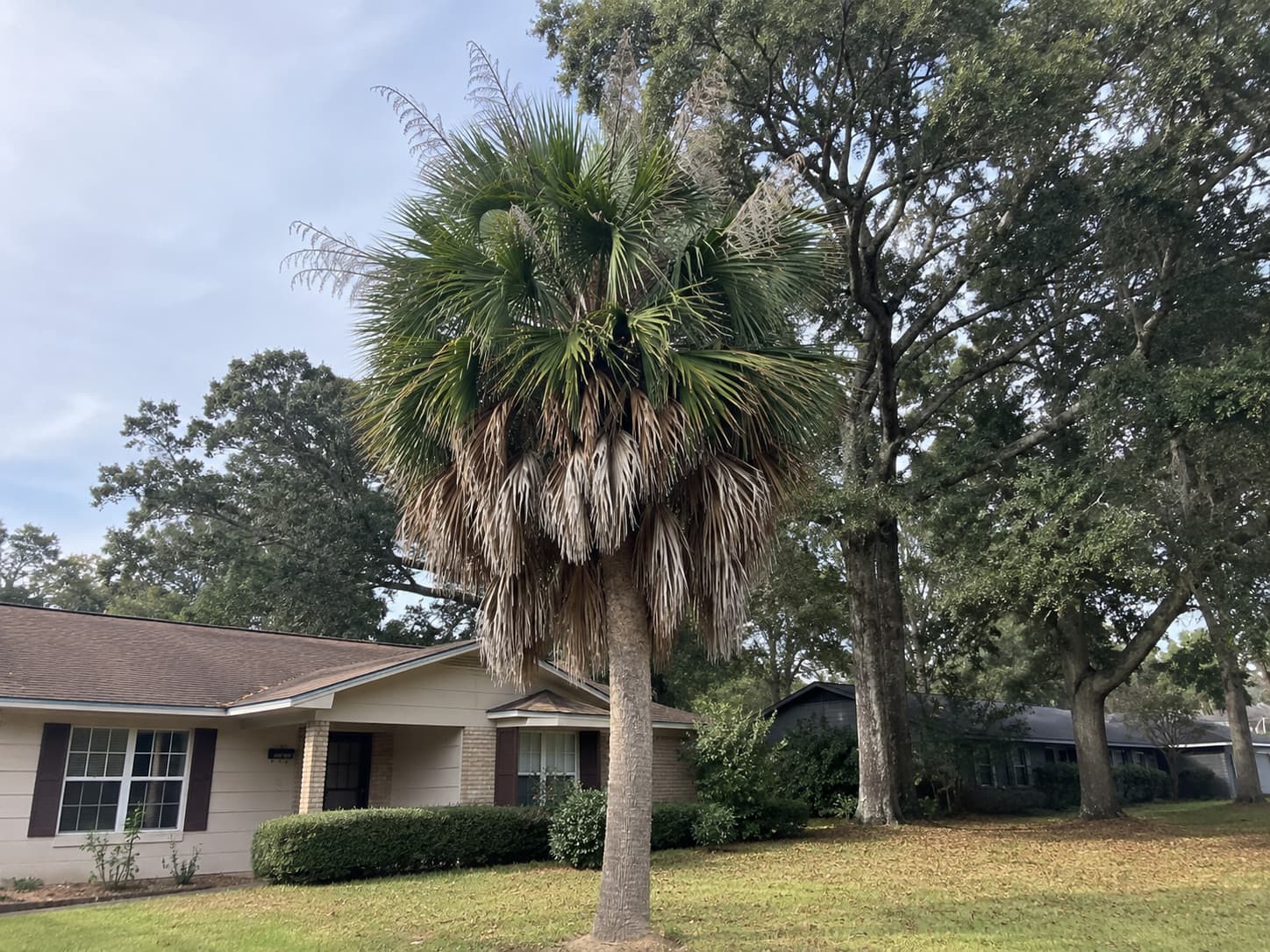
- Ideal: Remove only completely brown, dead fronds. Leave everything with green.
- Maximum limit: Never remove any frond positioned above horizontal, the 9-and-3 line.
- Never: Cut healthy green fronds up into a small tuft at the top.
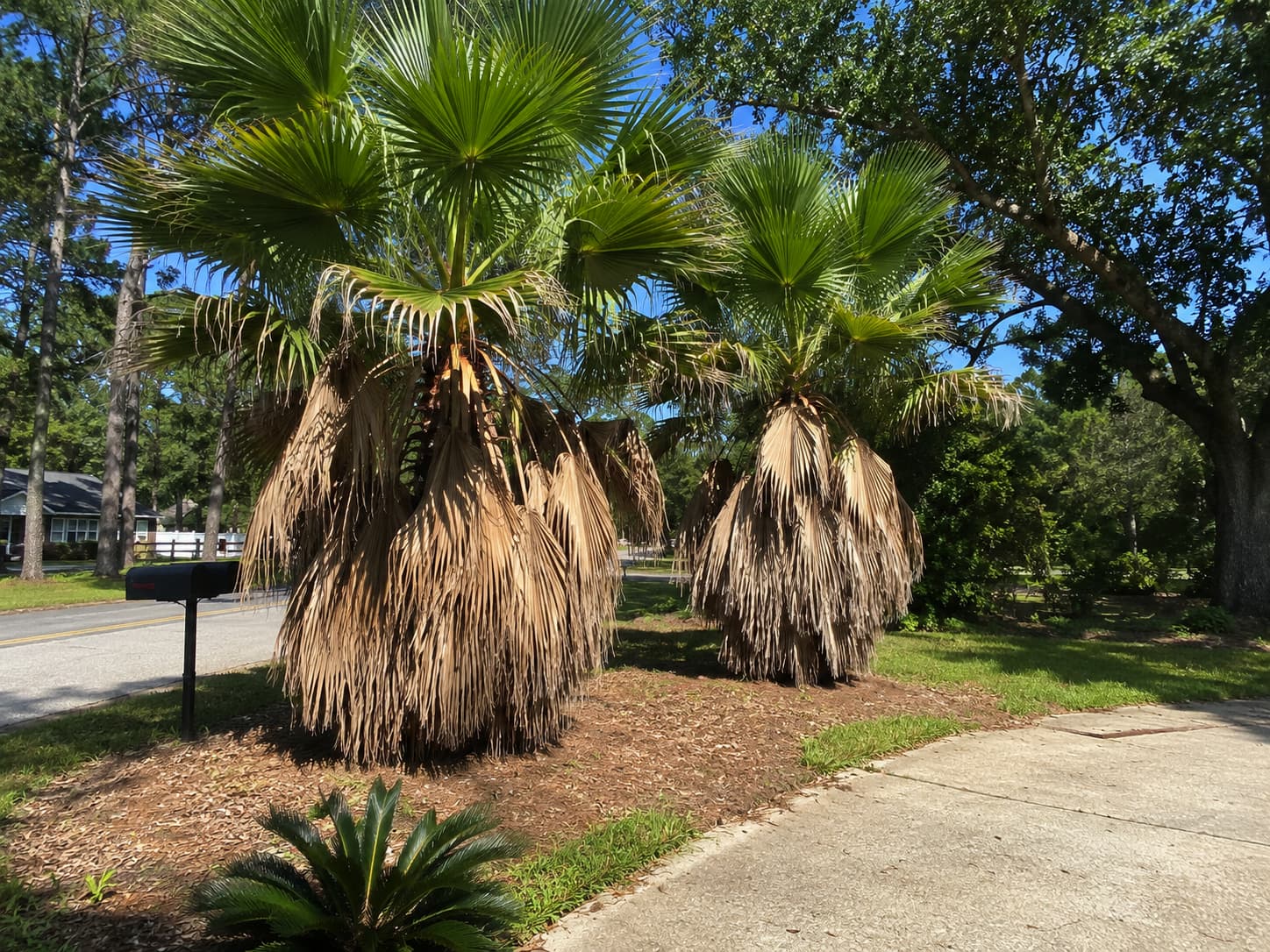
An over-pruned palm develops a distinctive “feather duster” look, with fronds pointing only upward. UF/IFAS notes that repeated over-pruning can cause a palm to develop smaller leaves and even a narrower trunk, a weak point called penciling that can become a breaking point in high winds.
Why Is the Hurricane Cut So Harmful?
The hurricane cut, removing most fronds and leaving only a small tuft at the top, is harmful because it starves and weakens the palm. UF/IFAS research after the 2004 and 2005 hurricane seasons found that palms with hurricane cuts were more likely to have their crowns snapped by storm winds than lightly pruned or unpruned palms. It does the opposite of what people intend.
This deserves its own section because it is both extremely common in Florida and completely counterproductive.
The logic behind the hurricane cut sounds reasonable: remove fronds to reduce wind resistance so the palm is less likely to blow over. But the research shows it backfires. According to UF/IFAS Extension, data following the 2004 and 2005 hurricane seasons found that palms with hurricane cuts were much more likely to have their crowns snapped by hurricane-force winds, because the youngest leaves lost the support normally provided by the older leaf bases around them.
The harm goes further than storm vulnerability:
- Storm damage. Over-pruned palms snap more easily, since the remaining young fronds lack the support of surrounding fronds.
- Starvation. Green fronds feed the palm. Removing them cuts its energy supply and slows growth.
- Cold vulnerability. Severely pruned palms are more susceptible to freeze damage, a real concern in the Florida Panhandle and North Florida.
- Nutrient deficiency. Over-pruning contributes to the nutrient problems palms already face in Florida’s sandy soils.
The takeaway is simple: leave as much green as possible. A full canopy lets the palm sway naturally and protects the vital growing bud at the crown. Any tree service that recommends a hurricane cut is not following current arboricultural guidance.
How Do You Trim a Palm Tree Correctly?
To trim a palm correctly, use clean, sharp tools, remove only fully brown fronds by cutting a few inches from the trunk without wounding it, remove seed pods and flower stalks if desired, and never climb the palm with spikes, which wound the trunk. For tall palms, professional equipment is safer and protects the tree.
Once you know what to remove, the technique itself is straightforward. The key is being conservative and protecting the trunk.
A safe, correct approach:
- Use clean, sharp tools. Sanitized blades reduce the risk of spreading disease between palms.
- Cut only fully brown fronds, leaving a few inches of frond base rather than cutting flush into the trunk.
- Do not wound the trunk. Cuts into the trunk do not heal and invite disease.
- Remove seed pods and flower stalks if you want to reduce litter and fruit drop.
- Never use climbing spikes on a palm you are keeping. Spikes puncture the trunk and leave permanent wounds vulnerable to disease.
- Leave tall palms to professionals. Trimming a tall palm from a ladder is dangerous, and proper equipment protects both you and the tree.
A note on disease: because unclean tools can spread lethal palm diseases like Fusarium wilt, sanitizing between trees genuinely matters, which is one reason professional trimming is often worth it.
Which Palms Are Self-Cleaning and Need No Trimming?
Some palms are self-cleaning, meaning their old fronds drop off on their own and they require no trimming at all. Common self-cleaning palms include royal palms and Christmas palms. For these, no routine pruning is needed. Sabal palms, Florida’s state tree, are largely self-cleaning as well and need only minimal care.
It is worth knowing whether your palm even needs attention, because many do not.
Self-cleaning palms shed their spent fronds naturally, so trying to trim them often just means removing green fronds you should have left. Royal palms and Christmas palms are classic examples. For these species, the best care is usually no pruning at all beyond removing a fallen frond from the ground.
Florida’s own state tree, the sabal palm (also called cabbage palm), is highly wind-resistant and largely self-maintaining. It needs at most a light annual cosmetic trim to remove dead fronds and seed stalks, and it should never be hurricane cut. Its natural storm resilience is exactly why over-pruning it is such a waste and a risk.
If you are unsure what species you have or whether it needs trimming at all, that is a good question for a professional, who can also spot early signs of the nutrient deficiencies and diseases that commonly affect Florida palms.
Get Professional Palm Trimming From Coste Tree Service
Palms are low-maintenance when they are treated correctly, but they are easy to damage with over-eager pruning. The right approach is light, well-timed, and species-appropriate, removing only what should come off and leaving the green canopy that keeps the palm healthy and storm-resistant.
Coste Tree Service works with homeowners across the Tallahassee and Big Bend area to trim palms and trees the right way, following current arboricultural guidance rather than harmful shortcuts like the hurricane cut.
To keep your palms healthy and looking their best, contact Coste Tree Service for palm trimming. A specialist will assess your palms, recommend only what they actually need, and handle tall or difficult palms safely.
Frequently Asked Questions
Most palms need trimming only once a year, in late spring or early summer, to remove fully brown fronds and seed pods. Some self-cleaning palms need no trimming at all. Trimming more often usually means green fronds are being removed unnecessarily, which harms the tree.
Late spring or early summer, before hurricane season and while the palm is actively growing so it recovers quickly. Avoid fall and winter, when cooler temperatures slow recovery and leave cuts vulnerable to cold damage. Fully dead, brown fronds and seed pods can be removed at any time.
No. The hurricane cut is harmful. UF/IFAS research after the 2004 and 2005 hurricane seasons found that over-pruned palms were more likely to have their crowns snapped by storm winds than lightly pruned palms. It also starves the tree and increases cold and nutrient vulnerability. Leave as much green as possible.
Only fully brown, dead fronds. The absolute limit is to never cut fronds above a 9-and-3 o'clock horizontal line, but that is a maximum, not a goal. The healthiest approach is a full, round canopy with green fronds left in place and only dead material removed.
No. Self-cleaning palms like royal palms and Christmas palms drop their old fronds naturally and need no trimming. Sabal palms, Florida's state tree, are largely self-maintaining too. Many palms are healthiest with little or no pruning, so trimming should be light and only when genuinely needed.
Why Coste Tree
- Same day estimates on storm damage
- Permit filing handled for protected trees
- Sectional rigging near roofs and lines
- Site raked clean before we leave
Free On Site Tree Assessment
We tell you whether it needs to come down, and what it costs, in writing.