How to Tell If a Tree Is Dead, Dying, or Dangerous
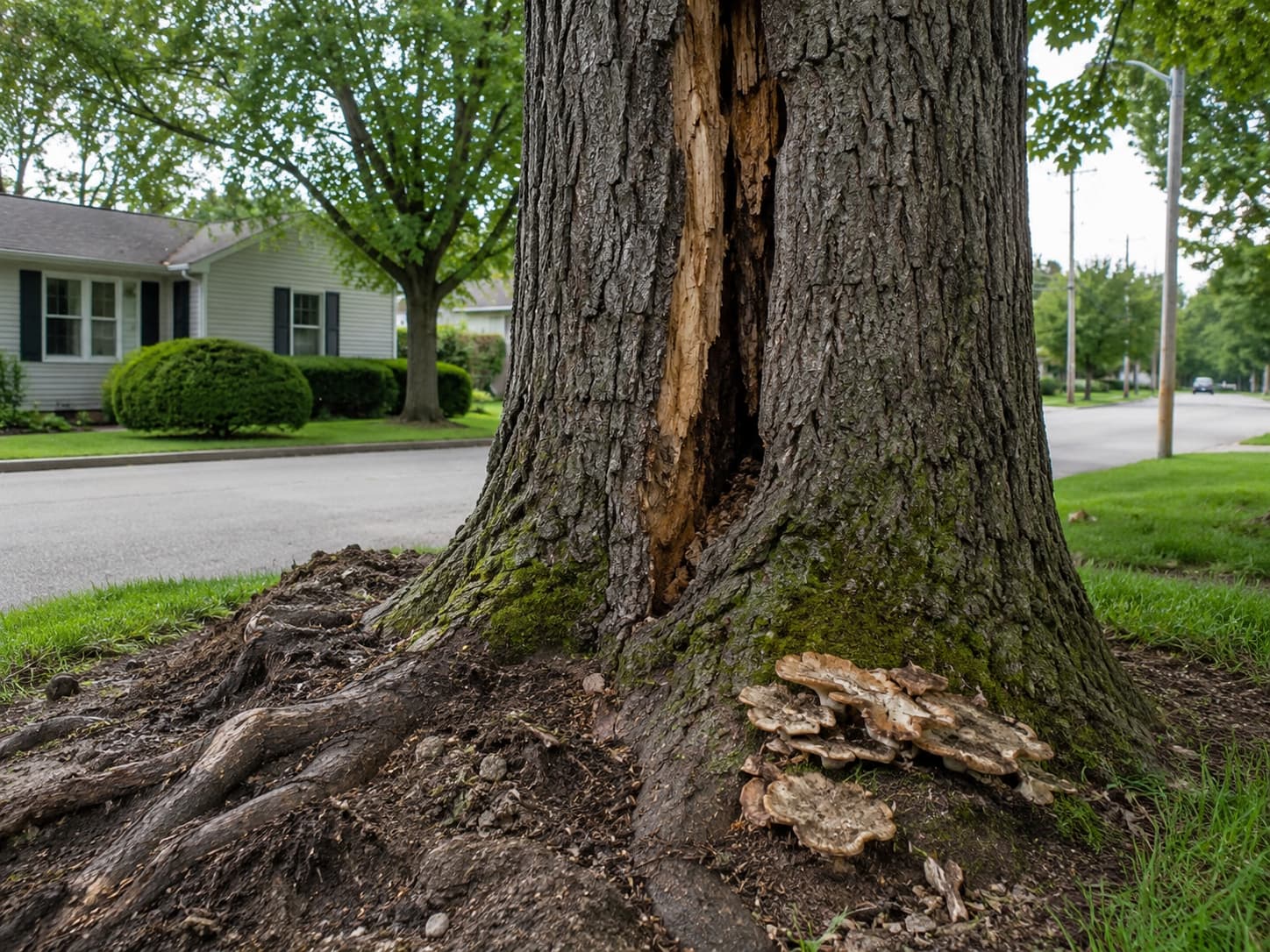
A failing tree rarely falls without warning. Long before a limb comes down on a roof or a trunk splits in a storm, the tree gives off signs, if you know what to look for. Catching those signs early is the difference between a manageable pruning or treatment and an expensive, dangerous emergency removal.
This guide covers how to tell if a tree is dead or dying, the warning signs that a tree has become hazardous, a simple DIY scratch test you can do yourself, and when a tree genuinely needs to be removed versus when it might be saved.
The clearest signs a tree is dying or dangerous include large dead branches, a sudden or worsening lean, deep trunk cracks or cavities, fungus or mushrooms at the base, peeling bark, and heaving soil or exposed roots. A single symptom is not always serious, but several together, especially near a structure, signal a hazard that needs professional evaluation.
Key Takeaways
- Multiple signs together matter most. One dead branch is minor; several warning signs at once signal real trouble.
- A sudden or worsening lean is urgent, especially with cracked or heaved soil at the base, which suggests root failure.
- Fungus and mushrooms at the base often indicate internal decay that weakens the trunk.
- The scratch test is a quick DIY check. Green under the bark means alive; brown and dry means dead.
- Do not DIY a hazardous tree. Dead wood is brittle and unpredictable, so removal is a job for insured professionals.
How Can You Tell If a Tree Is Dead or Dying?
You can tell a tree is dead or dying by looking for bare branches during the growing season, thinning or discolored leaves, brittle twigs that snap instead of bending, peeling or missing bark, and fungus near the base. The quickest at-home check is the scratch test: green tissue under the bark means living wood, while brown and dry means dead.
Distinguishing a dying tree from one that is merely stressed or dormant is the first step, and there are reliable indicators.
The common signs of a declining tree include:
- Bare branches in the growing season. A canopy that fails to leaf out, especially across the whole tree rather than one branch, is a serious sign.
- Thinning, small, or discolored leaves. Sparse or yellowing foliage means the tree is struggling to produce energy.
- Brittle, snapping twigs. Living twigs bend; dead ones snap cleanly and dry.
- Peeling or falling bark. Bark is the tree’s protective skin, and large areas of loss expose it to decay and pests.
- Fungus or mushrooms growing on the bark, roots, or base.
A dying tree can sometimes be saved if the problem is caught early and the trunk and roots are still sound. A dead tree cannot, and it only becomes more hazardous over time as the wood decays. Telling the two apart often comes down to the scratch test, covered below.
What Is the Scratch Test?
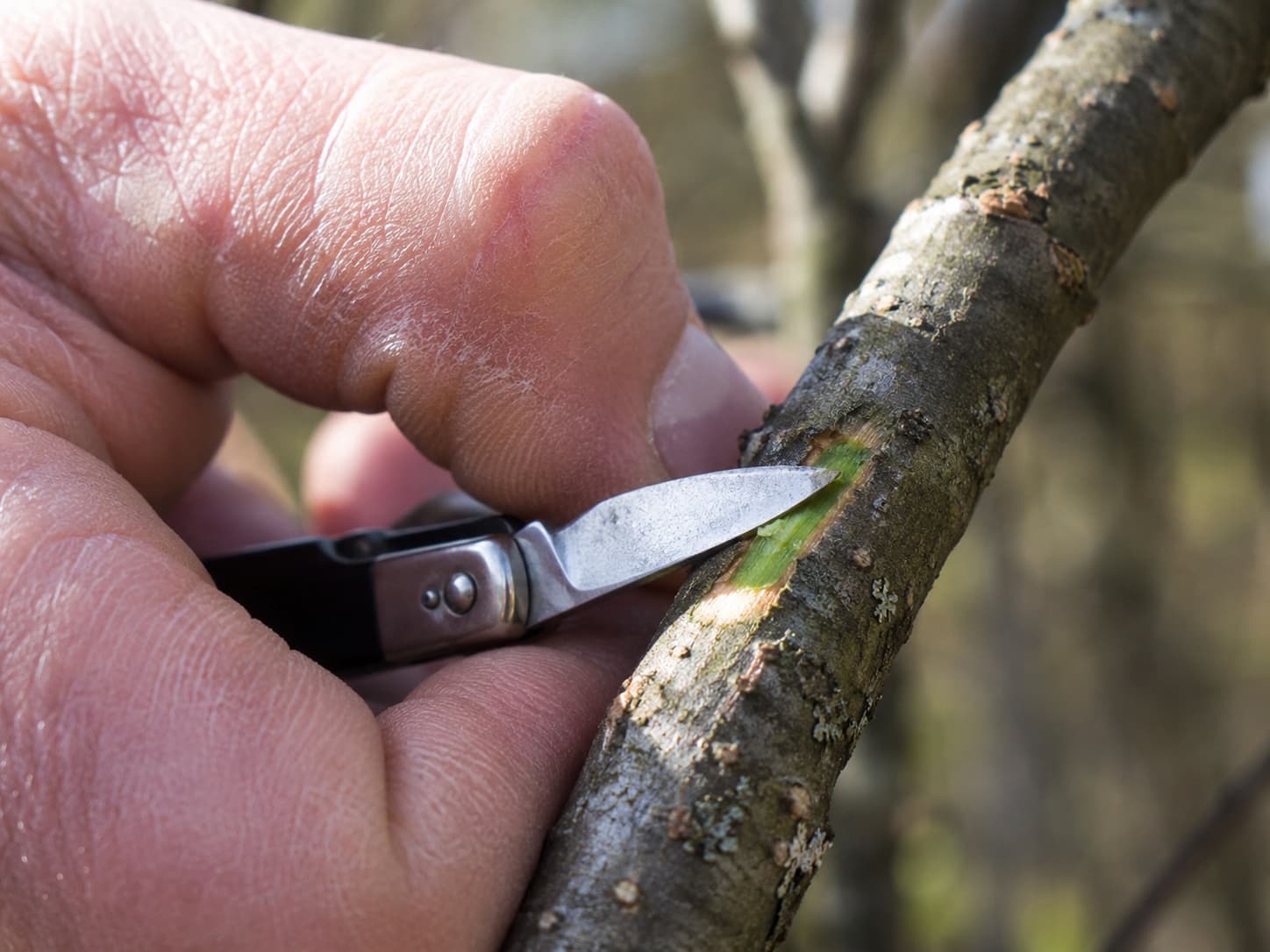
The scratch test is a simple way to check if a branch or tree is alive. Use a fingernail or pocketknife to gently scrape a small patch of bark on a twig or branch. If the layer just underneath is green and slightly moist, that wood is alive. If it is brown, dry, and brittle, that part is dead. Test several branches for an accurate picture.
This is the single most useful DIY diagnostic for tree health, and it takes seconds.
Here is how to do it properly:
- Pick a small twig or branch, not the main trunk.
- Scrape a shallow patch of the outer bark with a thumbnail or knife. You are only removing the thin outer layer.
- Look at the color underneath. Green and slightly moist means living tissue. Brown, dry, and brittle means dead.
- Test several branches in different parts of the tree, not just one. A single dead branch does not mean the whole tree is dead, but if every branch you test comes back brown, the tree is likely dead.
The scratch test is a great first check, but it tells you about the branches you can reach, not the internal condition of the trunk and roots, where the most dangerous problems hide. That is where a professional assessment comes in.
What Are the Warning Signs of a Dangerous Tree?
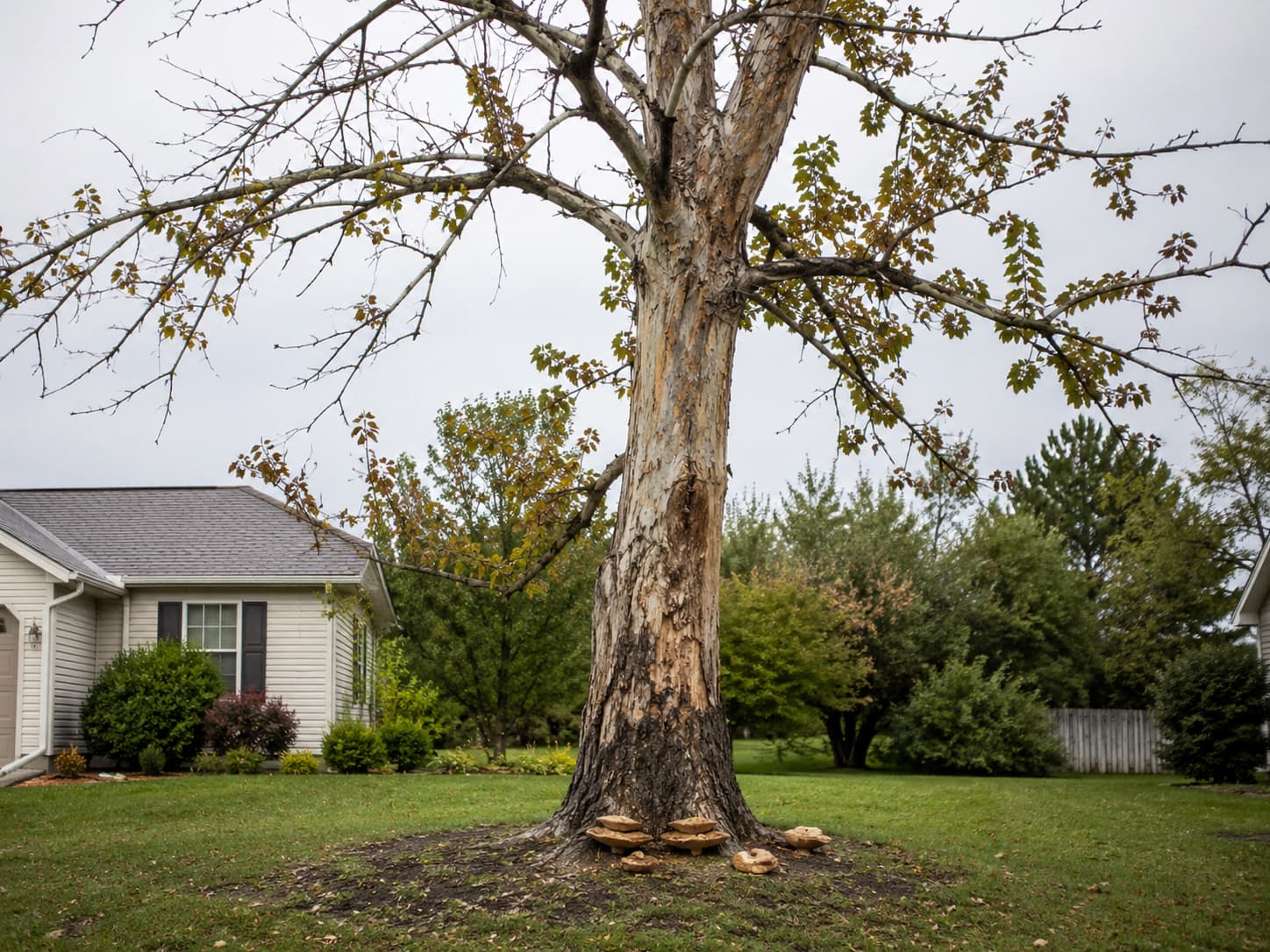
The warning signs of a dangerous, potentially failing tree include a sudden or worsening lean, deep vertical trunk cracks, large cavities or hollows, dead branches high in the canopy, fungus at the base, and heaving or cracked soil at the roots. These indicate compromised structure, and several together near a target like a home warrant urgent evaluation.
A tree can be alive and still be dangerous. Structural failure is a separate concern from whether the tree is healthy, and it is often the more urgent one.
The key hazard indicators:
- A sudden or worsening lean. A long-standing lean can be stable, but a new or increasing lean, especially with disturbed soil at the base, suggests the root system is failing.
- Deep trunk cracks or splits. Vertical cracks and deep wounds reduce the trunk’s ability to stand against wind.
- Cavities and hollows. Large hollow areas mean significant internal decay and lost structural wood.
- Large dead branches. Big dead limbs, sometimes called widow-makers, can fall without warning, particularly in storms.
- Fungus or mushrooms at the base. Shelf fungi and mushrooms near the roots or trunk often signal internal rot.
- Heaving or cracked soil at the base. Soil lifting on one side means roots are pulling out of the ground, a sign of imminent failure.
- A weak branch structure, such as tight V-shaped crotches where limbs are prone to splitting.
The most important principle is that these signs are far more serious in combination and when the tree is within falling distance of a house, driveway, power line, or play area. A hazardous tree over open field is a different situation from the same tree over a bedroom.
Does a Leaning Tree Always Need to Be Removed?
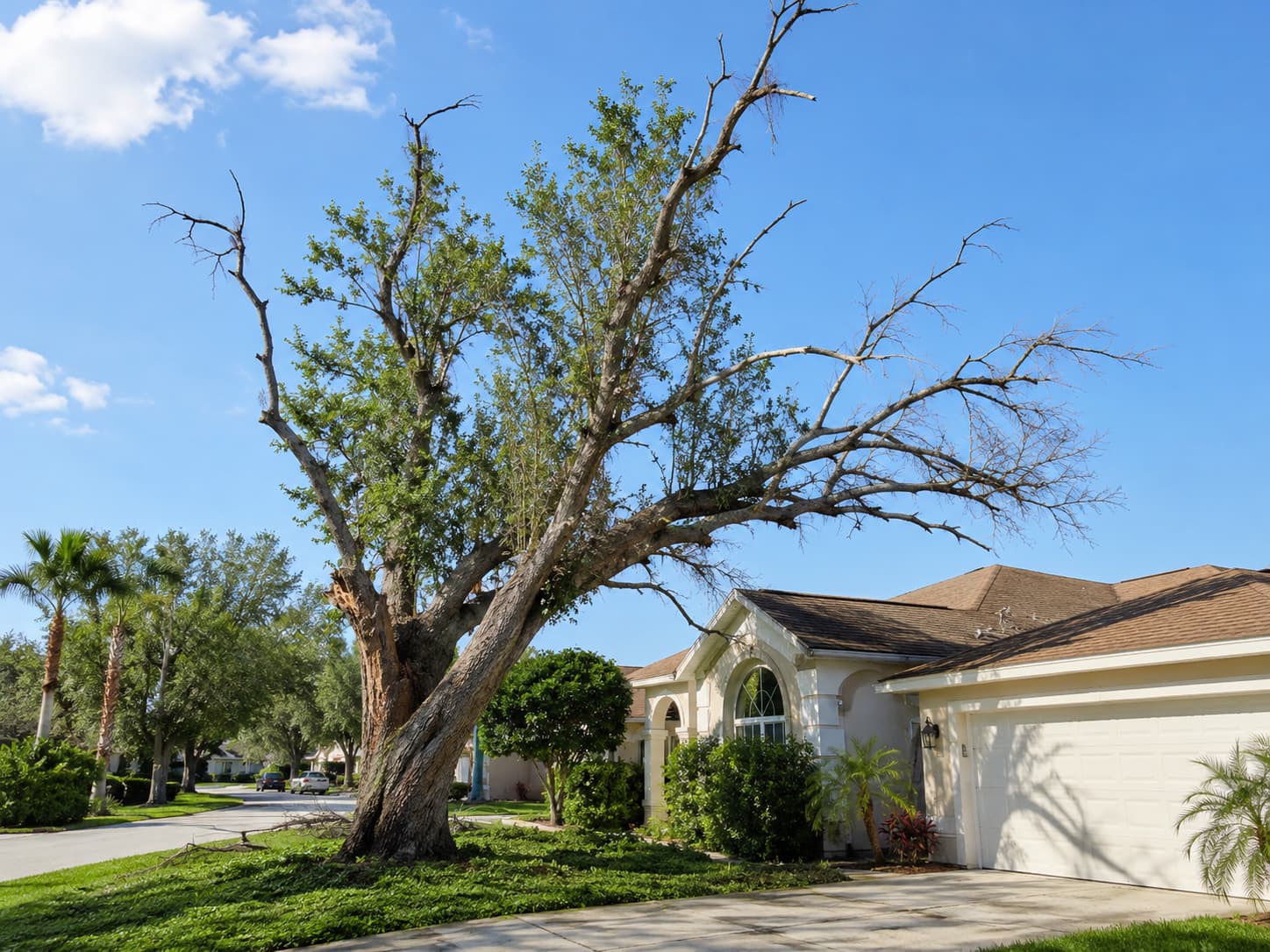
No, a leaning tree does not always need removal. A tree that has leaned the same way for years, with no soil disturbance, is often stable and grew that way naturally. The dangerous kind is a sudden or worsening lean, especially with cracked or heaved soil at the base, which suggests root failure and warrants prompt professional inspection.
Lean causes a lot of unnecessary worry, and a lot of dangerous complacency, so it is worth clarifying.
The distinction that matters:
- A long-standing, stable lean is common. Many healthy trees grow at an angle toward light, and if the lean has not changed and the soil is undisturbed, it is usually not an emergency.
- A sudden or increasing lean is the warning sign. If a tree that stood straight now leans, or a lean is visibly worsening, the roots or trunk may be failing.
- Lean plus soil movement is the urgent combination. Cracked, heaved, or mounded soil on the opposite side of the lean means the root plate is lifting, and the tree could come down.
After any major storm, a tree that has shifted or is leaning against a structure should be inspected promptly, since storm stress is a common trigger for root and trunk failure.
When Should a Tree Be Removed vs. Saved?
A tree should be removed when it is dead, structurally unsound, hollow, hazardously located, or leaning dangerously with root failure. A tree can often be saved when problems are caught early and the trunk and roots remain sound, through pruning, treatment, or cabling. A certified arborist provides the objective call.
The removal-versus-save decision is where professional judgment genuinely matters, because it balances safety, cost, and the value of keeping a mature tree.
Situations that usually call for removal:
- The tree is confirmed dead.
- The trunk is extensively hollow or decayed.
- There are major structural defects like deep cracks or a failing root plate.
- The tree is leaning dangerously with signs of root failure.
- The tree is hazardously close to a home or power line and cannot be made safe by pruning.
Situations where a tree may be saved:
- Problems are caught early and are limited in scope.
- The trunk and root system are still structurally sound.
- The issue can be addressed with pruning, treatment, or structural cabling.
Because some trees compartmentalize decay and stay sound for years while others are badly compromised, the amount of remaining structural wood is not something a homeowner can reliably judge from the outside. This is exactly the assessment a certified arborist provides.
Why Shouldn't You Remove a Hazardous Tree Yourself?
You should not DIY a hazardous tree removal because dead and damaged wood is brittle and behaves unpredictably, the tree may be unstable, and the work involves serious risks near structures and power lines. Professional crews have the training, equipment, and insurance to remove dangerous trees safely, which protects both people and property.
This warning matters because tree removal is one of the most dangerous jobs homeowners attempt, and hazardous trees multiply the danger.
The specific risks:
- Brittle, unpredictable wood. Dead and decayed wood does not cut or fall the way healthy wood does, making the tree’s behavior hard to predict.
- Instability. A compromised tree can shift or fail during the removal itself.
- Structures and lines. Trees near homes and power lines require climbing, rigging, and sectional dismantling, not a simple felling.
- Equipment danger. Chainsaws, chippers, and working at height carry serious injury risk without training.
A licensed, insured tree service carries the right equipment and the liability coverage that protects you if something goes wrong. Attempting a hazardous removal yourself risks injury, property damage, and costs that dwarf the price of the job.
Get a Tree Assessment From Coste Tree Service
The safest approach to a tree you are worried about is a professional set of eyes before it becomes an emergency. Many concerning trees can be saved with the right care, and the ones that cannot are far safer and cheaper to remove on a planned schedule than after they fail in a storm.
Coste Tree Service works with homeowners across the Tallahassee and Big Bend area to assess tree health and safety, and to handle pruning, treatment, and removal when needed, including hazardous trees near homes and power lines.
If you have noticed any of the warning signs in this guide, contact Coste Tree Service for a tree assessment. A specialist will evaluate the tree’s health and structure and recommend the safest, most cost-effective path forward.
Frequently Asked Questions
Look for bare branches during the growing season, brittle twigs that snap, peeling bark, and fungus at the base. The quickest check is the scratch test: scrape a small patch of bark, and if the wood underneath is green and moist, it is alive; if brown and dry, it is dead. Test several branches for accuracy.
It depends. A tree that has leaned the same way for years with undisturbed soil is often stable. A sudden or worsening lean, especially with cracked or heaved soil at the base, is dangerous and suggests root failure. Any tree that shifts or leans after a storm should be inspected promptly.
Often, yes. Mushrooms or shelf fungi growing on the trunk, base, or roots usually indicate internal decay, since fungi feed on dead and decaying wood. This can compromise the tree's structural integrity over time. Fungal growth at the base warrants a professional assessment to determine whether the tree is still safe.
Sometimes. If the problem is caught early and the trunk and roots are still structurally sound, a dying tree can often be saved with pruning, treatment, or cabling. If it is dead, extensively hollow, or leaning dangerously, removal is usually the safer choice. A certified arborist can make the objective call.
No. Removing a hazardous tree is dangerous work. Dead wood is brittle and unpredictable, the tree may be unstable, and the job often involves structures and power lines. A licensed, insured professional has the training, equipment, and coverage to do it safely, protecting both you and your property.
Why Coste Tree
- Same day estimates on storm damage
- Permit filing handled for protected trees
- Sectional rigging near roofs and lines
- Site raked clean before we leave
Free On Site Tree Assessment
We tell you whether it needs to come down, and what it costs, in writing.