A lot of what passed for pruning in Quincy after Hurricane Michael was topping, and the trees are worse for it. Coste Tree Service prunes and trims trees across Quincy and Gadsden County the right way: dead wood out, storm wounds cut clean so they can seal, structure corrected, and canopies kept healthy and off the house. We do not top trees, and a good share of our Gadsden County pruning is restoring the ones that were. Every job starts with a free on-site assessment and a written estimate.
An oak that was knuckled after the storm can usually be brought back. It takes a few seasons of corrective pruning, and we can lay out the plan.
Most homeowners use the two words interchangeably, which is fine. The difference still matters here.
Pruning removes specific branches for the tree’s health, structure, or safety. Every cut has a reason: a storm-broken limb never properly cut back, a crossing branch, a weak union.
Trimming is shaping and clearance, cutting growth back for appearance or to move it off a structure.
Years after Michael, Quincy’s trees need pruning far more than trimming. A crew that only shapes the outside of a canopy and ignores the ragged breaks inside it is not fixing anything.
After Michael, storm crews cut thousands of Gadsden County trees back to stubs and called it safety. Topping, cutting limbs with no regard for structure, is the most damaging thing routinely done to trees here, and the results are now visible all over town.
A topped tree answers each stub with a burst of dense, fast, weakly attached shoots. Those shoots hang on the outer layer of the stub, not the tree’s structure. Several years on, the canopy is heavier, the attachments are weaker, and every stub is decaying inward. A topped Quincy oak is more likely to fail in the next storm than it was before the storm crews got to it.
Topping also:
When a tree is genuinely too big for its spot, the correct tool is crown reduction, shortening limbs back to a lateral branch large enough to take over. No stubs, lower sail, and it actually works.
Most jobs use one or more of these. We tell you which your tree needs and why.
Pruning type | What it does | When it is used |
|---|---|---|
Crown cleaning | Removes dead, dying, diseased, and broken branches | The first job on any Michael-damaged tree, safe any time |
Crown thinning | Selectively removes interior branches | Lets wind through a dense oak instead of pushing on it |
Crown raising | Removes lower limbs for clearance | Over roofs, drives, and sidewalks in the historic district |
Crown reduction | Shortens limbs back to lateral branches | Trees grown over a house, the correct alternative to topping |
Restoration pruning | Rebuilds structure on a topped tree over several seasons | Oaks and pines cut to stubs by storm crews after 2018 |
Structural pruning | Corrects form on young trees | Builds a strong leader on the replacement trees planted since Michael |
Deadwooding | Removes dead limbs only | Pines and oaks over a house or drive before storm season |
One caution on thinning. Taking too much from the interior and leaving foliage only at the tips is called lion’s tailing. It loads the ends of long bare limbs and makes them more likely to break. If your tree looks dramatically different after pruning, too much came off.
On site assessment, written price, no obligation. We will tell you exactly what your tree needs, and what it does not.
Timing in Quincy follows North Florida’s calendar, with two local notes: real winter cold, and a lot of old storm damage that should not wait.
Dead, broken, and storm-damaged limbs come off whenever you find them. A ragged break decays into the limb and eventually the trunk, so the sooner it is cut clean to the collar, the better.
Structural pruning on large trees should be finished well before June 1 so cuts seal before storm season. The National Weather Service in Tallahassee covers Gadsden County.
Oaks and other hardwoods are best pruned in the dormant season, late winter into early spring, before the flush.
Magnolias are pruned after they bloom, or you cut off the flowers.
Quincy gets hard freezes, so we hold off on pruning cold-sensitive trees heading into winter.
If a storm is already in the forecast, it is too late to prune safely. For a tree already failing, see Emergency Tree Service in Quincy.
Palms are a minority tree in Gadsden County, mostly cabbage palms and ornamentals around town, but they get the same mistake everywhere: the hurricane cut. UF/IFAS observed after the 2004 and 2005 seasons that palms stripped to a tuft were more likely to lose their crowns than palms left full. The guidance is in UF/IFAS Pruning Palms.
Proper palm pruning:
Over-pruned palms draw weevils and disease, and fusarium wilt spreads on dirty tools, so tools are sterilized between palms. Cabbage palms shed their own fronds and often need nothing.
Quincy’s streets and yards are full of crape myrtles, and most of them get cut back to knuckles every winter. The practice is called crape murder, and it is topping on a smaller tree.
The stubs push whippy shoots that flop under the blooms, the knuckles swell and decay, and the vase shape and peeling bark are gone for good.
Crape myrtles bloom on new growth, so yearly pruning helps when it is done right: suckers at the base, crossing branches, spindly interior twigs, and old seed heads removed, with the trunk structure thinned to show. Cuts stay small. A knuckled tree can be restored over a few seasons, and we can set out the plan.
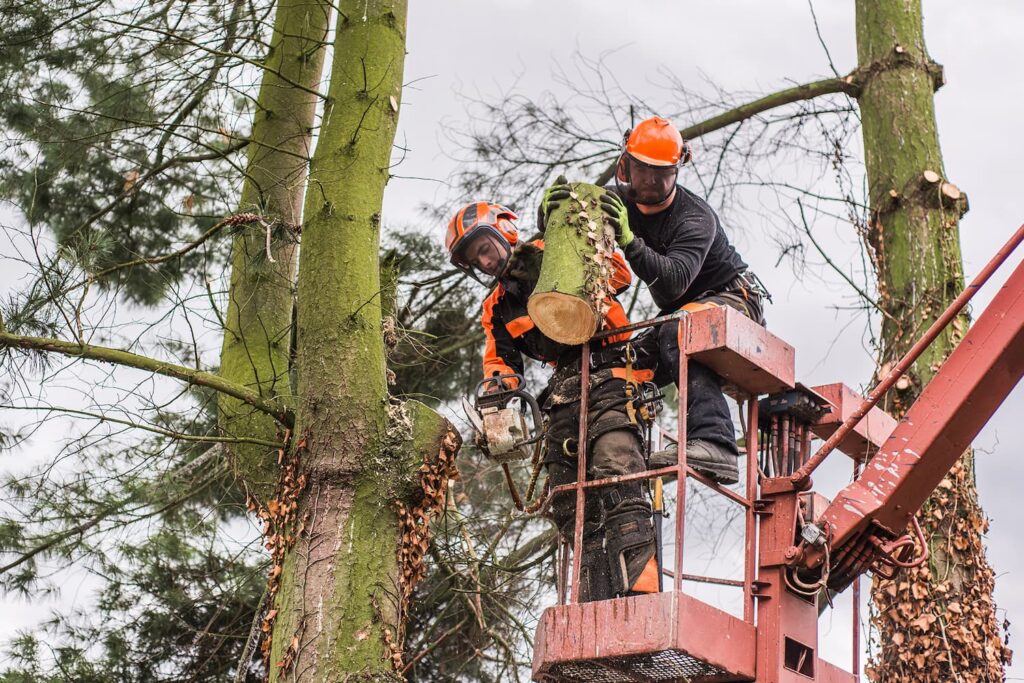
Light, regular care costs far less over the life of a tree than another storm’s worth of damage handled all at once.
Every Coste pruning quote covers:
Not included: stump grinding, removal, fertilization, disease treatment, and roof or gutter work. Each is quoted separately.
Job type | Typical range |
|---|---|
Small ornamental or crape myrtle | [$X to $X] |
Pecan, crown cleaning and reduction | [$X to $X] |
Mature live oak, crown cleaning and deadwood | [$X to $X] |
Large oak, crown reduction over a historic home | [$X to $X] |
Palm, per palm | [$X to $X] |
Five factors set the price:
Be wary of a quote well below the others. In Quincy especially, the cheapest bid after a storm has very often been a topping job.
Coste Tree Service prunes trees across Quincy and Gadsden County, including the Quincy Historic District, Havana, Gretna, Midway, Greensboro, Mount Pleasant, and Chattahoochee. For scheduled removals, see Tree Removal in Quincy.
In common use they mean the same thing. Technically, pruning is removing specific branches for the tree's health, structure, or safety, while trimming is shaping and clearance. Good tree care is mostly pruning.
Usually, with restoration pruning over several seasons. We select the strongest of the regrowth and rebuild a stable structure. It never fully restores the original form, but it is far better than removal.
Prune them. A ragged break decays into the limb and eventually the trunk. A clean cut back to the branch collar lets the tree seal the wound.
After they bloom. Pruning earlier removes the flowers. Dead wood can come off any time.
Yes. Topping triggers weak regrowth, opens wounds the tree cannot seal, and leaves it more likely to fail in a storm. Crown reduction is the correct way to reduce a tree that has outgrown its spot.
Routine pruning generally does not require one. Heavy reduction on a protected tree, or work in the historic district, can. We check before we cut, and you can confirm with the City of Quincy.
We tell you whether it needs to come down, and what it costs, in writing.
A lot of what passed for pruning in Quincy after Hurricane Michael was topping, and the trees are worse for it. Coste Tree Service prunes and trims trees across Quincy and Gadsden County the right way: dead wood out, storm wounds cut clean so they can seal, structure corrected, and canopies kept healthy and off the house. We do not top trees, and a good share of our Gadsden County pruning is restoring the ones that were. Every job starts with a free on-site assessment and a written estimate.
An oak that was knuckled after the storm can usually be brought back. It takes a few seasons of corrective pruning, and we can lay out the plan.
Most homeowners use the two words interchangeably, which is fine. The difference still matters here.
Pruning removes specific branches for the tree’s health, structure, or safety. Every cut has a reason: a storm-broken limb never properly cut back, a crossing branch, a weak union.
Trimming is shaping and clearance, cutting growth back for appearance or to move it off a structure.
Years after Michael, Quincy’s trees need pruning far more than trimming. A crew that only shapes the outside of a canopy and ignores the ragged breaks inside it is not fixing anything.
After Michael, storm crews cut thousands of Gadsden County trees back to stubs and called it safety. Topping, cutting limbs with no regard for structure, is the most damaging thing routinely done to trees here, and the results are now visible all over town.
A topped tree answers each stub with a burst of dense, fast, weakly attached shoots. Those shoots hang on the outer layer of the stub, not the tree’s structure. Several years on, the canopy is heavier, the attachments are weaker, and every stub is decaying inward. A topped Quincy oak is more likely to fail in the next storm than it was before the storm crews got to it.
Topping also:
When a tree is genuinely too big for its spot, the correct tool is crown reduction, shortening limbs back to a lateral branch large enough to take over. No stubs, lower sail, and it actually works.
Crown Cleaning
Removes dead, dying, diseased, and broken branches.
Used for: The most common service. Safe on nearly any tree, any time.
Crown Thinning
Selectively removes interior branches to reduce density.
Used for: Improving air movement through the canopy and reducing wind load.
Crown Raising
Removes lower limbs to create clearance underneath.
Used for: Clearance over a roof, driveway, sidewalk, or for mowing.
Crown Reduction
Shortens limbs back to suitable lateral branches.
Used for: Reducing height or spread near structures and lines. The correct alternative to topping.
Structural Pruning
Corrects form on young and medium trees.
Used for: Building a strong single leader early, preventing expensive problems later.
Vista Pruning
Selectively opens a sightline through the canopy.
Used for: Views and light, without stripping the tree.
Deadwooding
Removes dead limbs only.
Used for: Hazard reduction on mature trees, especially over targets.
One caution on crown thinning. Removing too much interior growth and leaving foliage only at the branch tips is called lion’s tailing. It looks tidy and it is harmful, because it moves all the weight to the ends of long bare limbs and makes them more likely to break. Proper thinning is subtle. If your tree looks dramatically different, too much came off.
On site assessment, written price, no obligation. We will tell you exactly what your tree needs, and what it does not.
Timing in Quincy follows North Florida’s calendar, with two local notes: real winter cold, and a lot of old storm damage that should not wait.
Dead, broken, and storm-damaged limbs come off whenever you find them. A ragged break decays into the limb and eventually the trunk, so the sooner it is cut clean to the collar, the better.
Structural pruning on large trees should be finished well before June 1 so cuts seal before storm season. The National Weather Service in Tallahassee covers Gadsden County.
Oaks and other hardwoods are best pruned in the dormant season, late winter into early spring, before the flush.
Magnolias are pruned after they bloom, or you cut off the flowers.
Quincy gets hard freezes, so we hold off on pruning cold-sensitive trees heading into winter.
If a storm is already in the forecast, it is too late to prune safely. For a tree already failing, see Emergency Tree Service in Quincy.
Palms are a minority tree in Gadsden County, mostly cabbage palms and ornamentals around town, but they get the same mistake everywhere: the hurricane cut. UF/IFAS observed after the 2004 and 2005 seasons that palms stripped to a tuft were more likely to lose their crowns than palms left full. The guidance is in UF/IFAS Pruning Palms.
Proper palm pruning:
Over-pruned palms draw weevils and disease, and fusarium wilt spreads on dirty tools, so tools are sterilized between palms. Cabbage palms shed their own fronds and often need nothing.
Quincy’s streets and yards are full of crape myrtles, and most of them get cut back to knuckles every winter. The practice is called crape murder, and it is topping on a smaller tree.
The stubs push whippy shoots that flop under the blooms, the knuckles swell and decay, and the vase shape and peeling bark are gone for good.
Crape myrtles bloom on new growth, so yearly pruning helps when it is done right: suckers at the base, crossing branches, spindly interior twigs, and old seed heads removed, with the trunk structure thinned to show. Cuts stay small. A knuckled tree can be restored over a few seasons, and we can set out the plan.
Light, regular care costs far less over the life of a tree than another storm’s worth of damage handled all at once.
Every Coste pruning quote covers:
Not included: stump grinding, removal, fertilization, disease treatment, and roof or gutter work. Each is quoted separately.
Job type | Typical range |
|---|---|
Small ornamental or crape myrtle | [$X to $X] |
Pine deadwooding, one tree | [$X to $X] |
Mature oak, crown cleaning and deadwood | [$X to $X] |
Large tree, crown reduction near structure | [$X to $X] |
Cabbage palm, per palm | [$X to $X] |
Five factors set the price:
Be wary of a quote well below the others. In Quincy especially, the cheapest bid after a storm has very often been a topping job.
Coste Tree Service prunes trees across Quincy and Gadsden County, including the Quincy Historic District, Havana, Gretna, Midway, Greensboro, Mount Pleasant, and Chattahoochee. For scheduled removals, see Tree Removal in Quincy.
In common use they mean the same thing. Technically, pruning is removing specific branches for the tree's health, structure, or safety, while trimming is shaping and clearance. Good tree care is mostly pruning.
Usually, with restoration pruning over several seasons. We select the strongest of the regrowth and rebuild a stable structure. It never fully restores the original form, but it is far better than removal.
Prune them. A ragged break decays into the limb and eventually the trunk. A clean cut back to the branch collar lets the tree seal the wound.
After they bloom. Pruning earlier removes the flowers. Dead wood can come off any time.
Yes. Topping triggers weak regrowth, opens wounds the tree cannot seal, and leaves it more likely to fail in a storm. Crown reduction is the correct way to reduce a tree that has outgrown its spot.
Routine pruning generally does not require one. Heavy reduction on a protected tree, or work in the historic district, can. We check before we cut, and you can confirm with the City of Quincy.
We tell you whether it needs to come down, and what it costs, in writing.
Tell us what you need and we’ll call you back within one business day.
I couldn’t recommend Coste Tree Service more highly! Jason Coste and his team are professional, reliable, and incredibly knowledgeable. From the first call to the final cleanup, the entire process was seamless. They showed up on time, took great care in their work, and left the property looking better than ever.